A Synth Built For Fingers, Not Just For Keyboards
?utm_source=reddit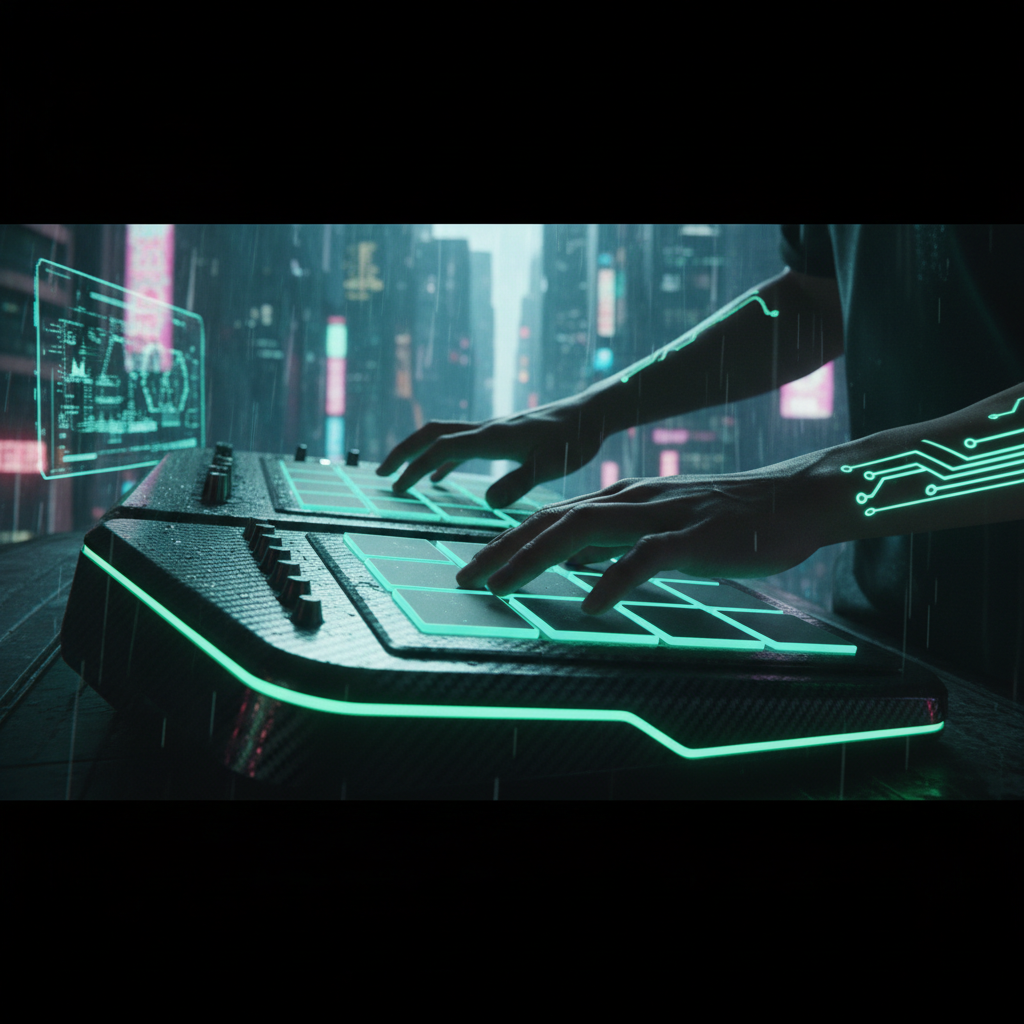
Hardware for expressive music has been here for years. The software is just starting to catch up. Embodme's ERAE Sound is a solution to a problem they helped create.
Expressive controllers have been a solution in search of a problem for fifteen years. You buy a ROLI Seaboard or a LinnStrument, a beautiful piece of hardware that lets you bend and slide and press notes with the nuance of a cello. Then you spend a week figuring out which of your thousand-dollar software synths actually listen. Embodme’s marketing for its new ERAE Sound synthesizer, calling it the 'first' synth built for an expressive surface, is nonsense — Haken Audio would like a word. But the frustration it points to is real. For years, the software has been the weakest link. A great controller is just a silent sculpture without a synth that knows what to do with all that data.
ERAE Sound was built to understand MIDI Polyphonic Expression, or MPE. Standard MIDI is a dumb signal; every note gets the same pitch bend, the same global modulation. MPE gives every finger its own channel for five dimensions of control: how hard you strike, how much you press, how you glide between pitches, where your finger slides on the Y-axis, and how fast you lift off. Embodme’s pitch is that its 83 instruments were built from the ground up for this, meaning the physical modeling or FM synthesis engine itself is designed to respond to a finger slide, not just have a filter cutoff mapped to it after the fact. It’s an AU/VST plug-in, so it runs in any major DAW, but you need a host like Ableton Live or Bitwig that properly supports MPE to get the full effect. At $89, it’s not a huge hardware dongle; it’s an invitation.
This isn't about getting rich on an $89 plug-in. This is about selling the ERAE Touch, Embodme's thousand-dollar MPE hardware controller. It's a classic ecosystem play: build the razor, then sell the blades — or in this case, build the expensive blade, then give away the razor handle to make it useful. ROLI tried the same integrated hardware-software strategy with its Seaboard and Equator synth, a journey that led it through bankruptcy and restructuring. Embodme is betting it can succeed where ROLI stumbled, by creating a software instrument open to all MPE controllers, not just its own. The losers, until now, have been the musicians who bought into the promise of MPE and were left with a very small toolbox. Embodme is just the latest company to realize it had to build the tools itself.
This won't push MPE into the mainstream overnight. But ERAE Sound, along with synths like U-He's Hive and Arturia's Pigments, signal a slow turn. The next five years will show whether building a great software companion is enough to move expensive, niche hardware units. We might see a world where buying a controller doesn't lock you into a proprietary sound engine, but instead opens up a world of compatible software designed for touch. The keyboard has defined the shape of electronic music for half a century simply by being the default input device. The real question is whether the next generation of musicians, raised on touchscreens, even thinks of a keyboard as the default anymore.