Buc-ee's Ducks HBO, Sues a Small Ohio Beaver Mart Instead
?utm_source=reddit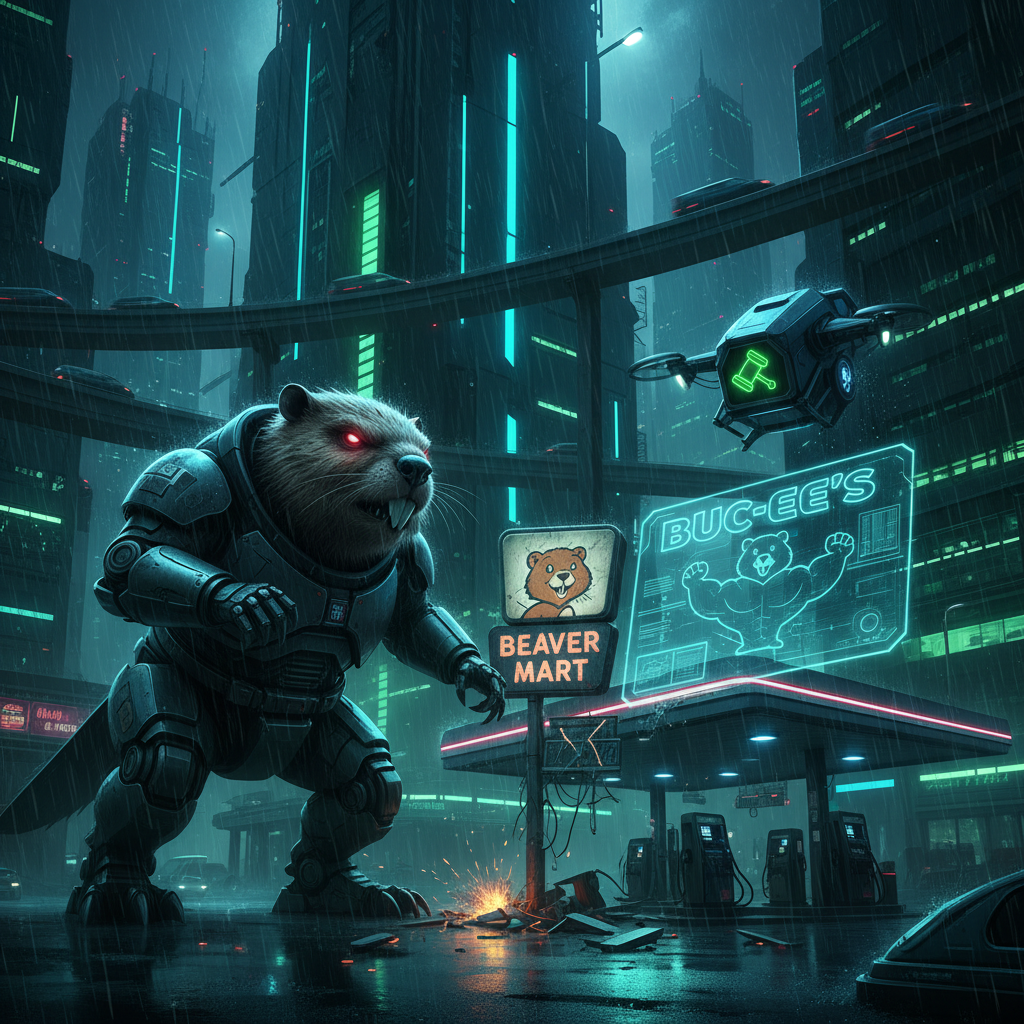
The gas station giant was dared to sue John Oliver and blinked. Instead, they’re suing a decades-old mini-mart in a town called Beavercreek, and the locals are not amused.
John Oliver and HBO threw the gauntlet. They created a cartoon rodent specifically to mimic the Buc-ee's beaver, plastered it on merchandise, and dared the notoriously litigious gas station chain to sue. Buc-ee's, a company that has built a side-hustle suing small businesses over cartoon animals, did nothing. They blinked. Instead of taking on HBO's legal war chest, they turned their attention to a new target. A local news report from WDTN confirms Buc-ee's is suing Beaver’s Mini Mart, a single convenience store in Beavercreek, Ohio, that has been there for decades. The fight everyone was watching isn't happening. This one is.
The legal weapon here is trademark law, specifically the claim of consumer confusion. Buc-ee's alleges in its filing that the Mini Mart's logo—a different cartoon beaver—is too similar because it has "wide eyes and a smile" and uses red. This is the standard playbook for a trademark bully: stretch the definition of infringement until it breaks. The reality on the ground makes the claim absurd. Beaver’s Mini Mart has existed for decades in a town literally named Beavercreek, where the high school mascot is the "Battling Beavers." The iconography isn't an infringement; it's the town's wallpaper. Buc-ee's, meanwhile, only opened its first Ohio location 16 miles away in April, according to the same report. This isn't a nuanced legal argument; it's a brute-force tactic deployed to overwhelm a smaller competitor with legal fees.
This is asymmetric warfare, and it's by design. A multi-state corporation like Buc-ee's can absorb the cost of litigation as a rounding error in its expansion budget. For Beaver’s Mini Mart, a single lawsuit can be an existential threat, regardless of its merits. Winning in court costs money most small businesses don't have, making a quick settlement or a costly rebranding the path of least resistance. This is how a company clears the market. By ducking the John Oliver challenge, as Techdirt first noted, Buc-ee's revealed its strategy: never pick a fair fight. The real prize isn't winning a specific case, but building a reputation that forces compliance before a single motion is ever filed.
The playbook that worked for Buc-ee's in the past may be hitting its limits. Suing a beloved local business moments after arriving in town is a terrible look, and local residents are already expressing their disgust. In the pre-internet era, this would be a quiet, effective kill. Today, it’s a public relations own-goal amplified by the national attention John Oliver already brought to the company's behavior. The next 1-3 years will show if the Streisand effect can serve as a viable defense against corporate trademark bullying. Buc-ee's may well win the lawsuit or force a settlement, but they risk poisoning the well in a market they just spent millions to enter. The question isn't whether one cartoon beaver is confusingly similar to another. It's who gets to own the identity of a place—the corporation that just moved in, or the community that's been there all along?
More in Legal

A Man Tried To Hack a Court With Invisible Ink
The hack failed because the court wasn't using AI. The fact that he thought it would work is the real story, and a preview of how legal tampering will evolve.

A Federal Judge Gives Google One Week to Stop Rigging Its App Store
Google lost its antitrust case but tried to win the compliance war with a deliberately confusing UI. A federal judge just called their bluff and is not amused.