BYD's Luxury SUV Is Coming to Europe. Its Battery Is the Real Threat.
?utm_source=reddit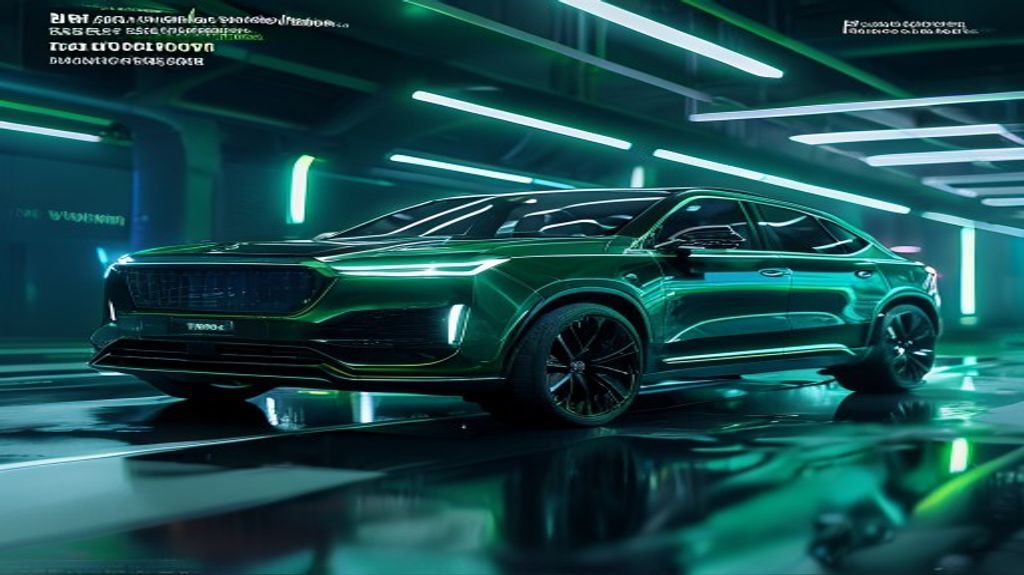
A three-row SUV with 150,000 pre-orders and a five-minute charge time is leaving China. For Europe's legacy automakers, the problem isn't the price. It's the platform beneath the leather seats.
The 150,000 pre-orders in China are the headline. But that number isn't the real story. The real story is that a seven-seat luxury SUV starting at roughly $35,500 is about to land in Europe by the end of 2026. The BYD Great Tang has all the requisite glass screens and massaging seats to check the luxury boxes. The spec sheet, however, contains a direct threat to every legacy automaker from Stuttgart to Gothenburg. The vehicle itself is a statement. The underlying tech is a declaration of war.
The threat is built on a 1,000-volt electrical architecture. This high-voltage platform is what enables BYD’s claim of replenishing the battery from 10% to 70% in just five minutes via its "Flash Charging" system. Delivering that kind of power requires not just a new battery, but an entirely new grid-to-vehicle ecosystem that most of Europe lacks. The battery itself is the Blade Battery 2.0, a cell-to-pack design using lithium iron phosphate chemistry that BYD has refined for density and safety. On the road, the vehicle’s weight is managed by BYD’s DiSus-A intelligent control system, an active air suspension that reads the road ahead to adjust dampening. A roof-mounted Lidar signals its ambitions for advanced driver-assistance, part of a sensor suite aimed at competing with Tesla's Autopilot.
At a starting price equivalent to $35,500 in its home market, BYD isn't just undercutting competitors; it's presenting an entirely different value calculation. While export pricing will surely be higher, the underlying cost structure, built on BYD’s vertical integration and China's massive domestic scale, creates a durable advantage. Stella Li, BYD’s executive vice president, confirmed in an interview with Bloomberg that the Great Tang is targeting Europe and the Asia-Pacific region by late 2026. This puts the company on a direct collision course with Mercedes-Benz, BMW, and Volvo. Even with potential EU tariffs, BYD's efficiency may allow it to absorb the costs and still challenge the incumbents on price for a feature-packed vehicle. The immediate losers are legacy automakers whose billion-dollar investments in EV platforms still result in cars that cost more and charge slower.
Over the next two years, the Great Tang will function as a flagship for BYD's entire technology stack in the West. Its reception in Europe won't just be about one vehicle model's sales figures; it will be a referendum on whether a Chinese brand can conquer the high-margin luxury segment based on superior hardware, not just a low price. Success would prove that decades of brand loyalty can be undone by a five-minute charge time. Legacy automakers now find themselves fighting a two-front war: against Tesla’s software and charging network, and now against BYD’s manufacturing scale and battery technology. The real question isn't whether legacy brands can build a competitive EV. It's whether they can do it profitably at a price consumers are willing to pay when a credible alternative costs half as much.
More in Automotive
That Electric Jet Flight Cost $5. The Real Story Is the Hybrid Engine.
Heart Aerospace flew a massive electric plane on a pocket change budget. But the demonstrator isn't the product. The real play is a hybrid jet that might actually save regional airlines from spiraling fuel costs.

The Job Site Goes Quiet: LiuGong's 30-Ton Electric Digger Lands In America
The roar of the diesel job site is about to get a lot quieter. A Chinese equipment giant is bringing an electric excavator to the US that it claims cuts operating costs by nearly half.