BYD's Qin Max Is Fine. The Nine-Minute Charge Is the Real Story.
?utm_source=reddit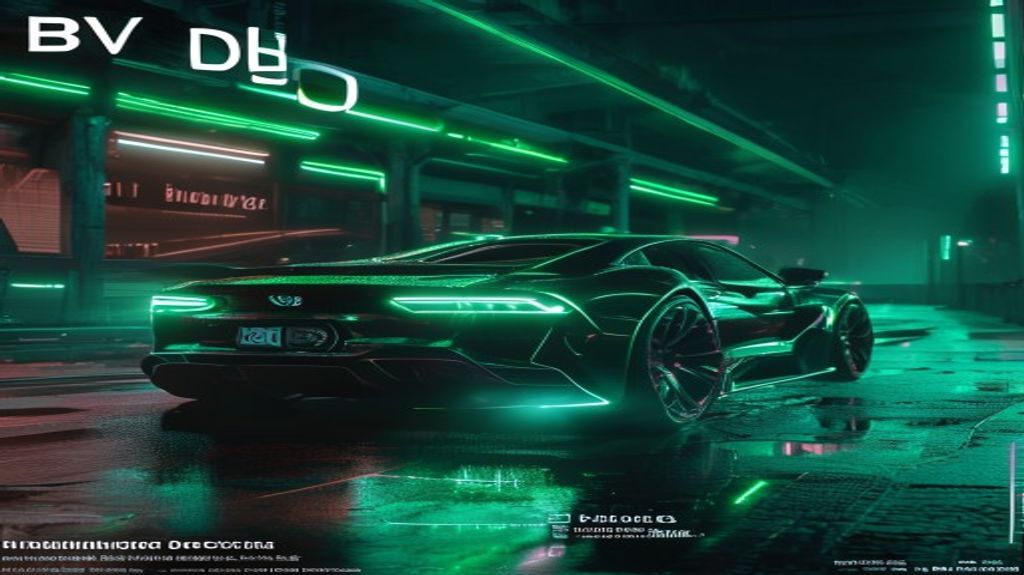
BYD just put a nine-minute full charge into a mass-market sedan. This isn't a lab demo; it's a direct threat to every automaker still measuring fast charges in half-hour increments.
The median fast-charge time for an EV in the West is still a 30-minute coffee break. BYD just announced nine minutes for a near-full charge. This isn't happening in a six-figure Porsche or a lab prototype; it's landing in the Qin Max, a mass-market sedan aimed directly at young buyers in the world's largest car market. The car itself is a competent, if derivative, B-segment sedan. But the car is not the story. The battery is the story, and it represents an existential threat to automakers who thought they had another decade to figure out affordable, fast-charging EVs. This isn't an incremental update. It's a fundamental change in the terms of competition.
The technology behind the nine-minute claim is BYD's second-generation Blade Battery, paired with a new “Flash Charging” system. Unlike the cylindrical cells used by Tesla or the pouch cells in many other EVs, BYD's Blade Battery uses long, thin lithium-iron-phosphate (LFP) cells arranged directly in the pack, a design that improves thermal dissipation and structural integrity. Charging a battery this fast generates immense heat. Blade Battery 2.0 pushes this thermal advantage further, likely through enhanced coolant channels and a predictive battery management system that can handle the extreme 6C-plus charging rates required. CarNewsChina reports the Qin Max will ship with 52.8 kWh or 64.3 kWh packs, mated to motors producing up to 240 kW. The chemistry itself, LFP, is cheaper and more stable than nickel-based alternatives, but traditionally charges slower. BYD appears to have solved the LFP charging bottleneck at scale.
BYD’s real weapon is vertical integration. It doesn't just assemble cars; it builds its own batteries, its own motors, and its own chips. This control over the supply chain is how it previously launched the smaller Qin L sedan for under $18,000, shocking established players. The Qin Max, having already been approved for sale by China's MIIT, will leverage this cost structure to pair its breakthrough charging with an aggressive price point. The immediate winners are Chinese consumers, who get gasoline-level convenience at an EV's running cost. The losers are every legacy automaker in Detroit, Wolfsburg, and Tokyo. They are now competing against a company that has erased one of the last major friction points of EV ownership while also winning on price. Global trade commissions and tariff discussions are no longer theoretical; they are the only remaining firewall.
This technology won't stay confined to the Qin Max or the Chinese domestic market for long. Expect to see Flash Charging proliferate across BYD’s entire lineup, from compacts to SUVs, within the next 24 months. The pressure now shifts to the infrastructure. Most public DC fast-charging stations in the US and Europe top out at 350 kW; BYD's system likely demands peaks well over 500 kW to hit its nine-minute target. This makes much of the current charging network instantly obsolete. It also forces a hard question back onto consumers and city planners. If a full charge is as fast as pumping gas, the need for ubiquitous Level 2 chargers in every garage and parking spot diminishes. The gas station model could see a renaissance, powered by electrons. The real question isn't if the battery works. It's who will pay to rebuild the grid to support it.
More in Automotive
That Electric Jet Flight Cost $5. The Real Story Is the Hybrid Engine.
Heart Aerospace flew a massive electric plane on a pocket change budget. But the demonstrator isn't the product. The real play is a hybrid jet that might actually save regional airlines from spiraling fuel costs.

The Job Site Goes Quiet: LiuGong's 30-Ton Electric Digger Lands In America
The roar of the diesel job site is about to get a lot quieter. A Chinese equipment giant is bringing an electric excavator to the US that it claims cuts operating costs by nearly half.