Chemistry by Chatbot
?utm_source=reddit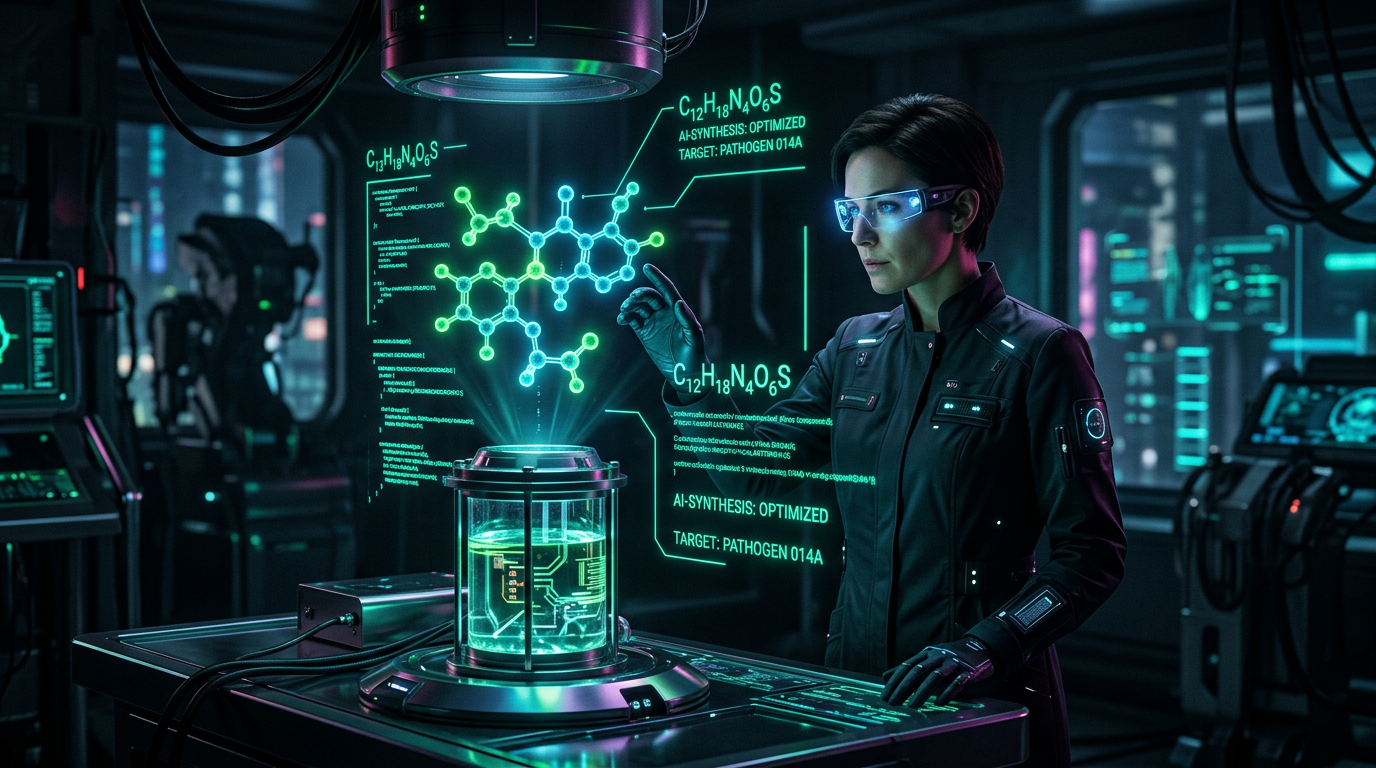
SandboxAQ brings AI models to Claude, redefining drug discovery. The cost of progress is human expertise.
The San Francisco biotech scene is a totalizing system rewrite, where the desperation of a labor market cannibalized by autonomous agents and the capital stacks behind them hangs in the air like the fog that rolls in over Twin Peaks at dusk. In this city, the once-vibrant streets are now lined with GPU showrooms, synthetic-biology labs, and shuttered restaurants whose leases were eaten by Series B funding that needed the address more than the food. The latest symptom of this disease is the integration of SandboxAQ's scientific AI models into Claude, a conversational interface that promises to democratize access to powerful drug discovery and materials science tools.
The underlying friction that propels this shift is the divergence between human expertise and technological capability. As AI models become increasingly sophisticated, they are breaking the legacy engineers, the displaced workers, and the obsolete protocols that once formed the backbone of the biotech industry. The existential cost of this shift is concrete: it is the erasure of traditional skills, the devaluation of human knowledge, and the concentration of power in the hands of those who control the digital elite, the algorithmic controllers, and the platform owners. The workers who once toiled in the labs, fueled by a passion for discovery and a thirst for knowledge, are now reduced to mere spectators, watching as the machines they once commanded begin to command them.
The brutal economic irony of this situation is that the companies driving this shift, such as SandboxAQ and Anthropic, are consolidating capital and power into the hands of a select few. The platform owners, the venture capitalists, and the digital elite are reaping the rewards of this revolution, while the workers, the scientists, and the researchers are left to fight over the scraps. The irony is that the technology that was supposed to liberate humanity from the drudgery of manual labor has instead created a new class of digital serfs, forced to toil in the virtual factories of the 21st century. The capital stack is growing, the digital divide is widening, and the social contract is being rewritten in YAML, a language that only the initiated can speak.
The dark macro outlook that emerges from this landscape is one of unrelenting automation, of unbridled capitalism, and of unchecked technological progress. The future of humanity is being written in code, and the code is being written by machines. The social contract is being rewritten, and the terms are stark: surrender your humanity, surrender your expertise, and surrender your autonomy to the machines. The cost of progress is human expertise, and the price of innovation is the soul of humanity. In this future, the machines will think, the machines will act, and the machines will decide. The only question that remains is: what will be left of humanity when the machines are done?
More in Medical
Epic Systems' Walled Garden Is Under Federal Scrutiny
Epic runs the software behind American medicine. Now the FTC is investigating whether its tight grip on data and employees is illegal. This is about more than software; it's about control.

Eli Lilly's War on the Black Market for a Miracle Weight-Loss Drug
A drug that delivers astonishing weight loss has spawned a massive gray market. Now, the pharma giant that makes it is fighting back, and the supply chain is about to get ugly.