Jeep's Grand Cherokee Fixes a Self-Inflicted Wound
?utm_source=reddit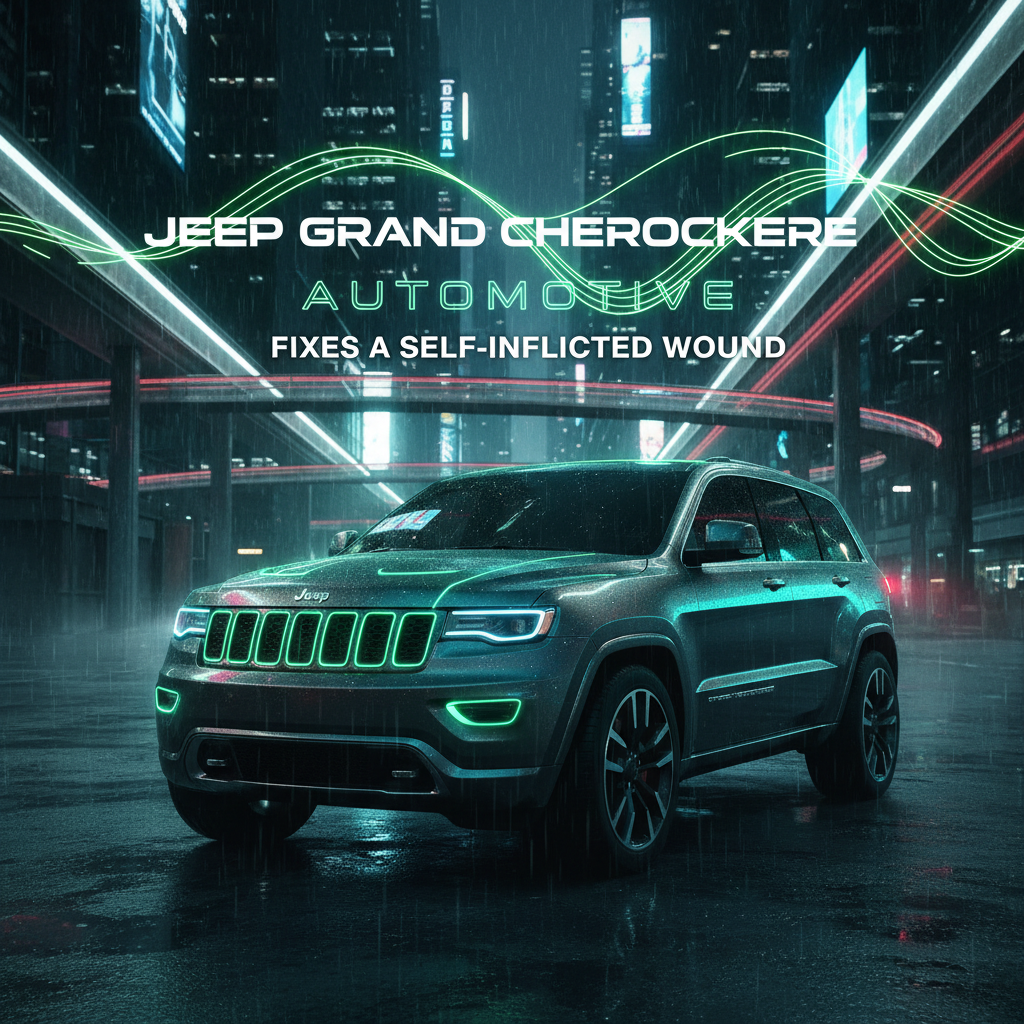
The flagship SUV gets its off-road credibility back after a bizarre product planning failure. But the Trail-Rated badge now comes with a very different engine underneath.
A Jeep that can't really go off-road feels like a punchline. For a short, strange period, that was the reality for the Grand Cherokee lineup after the brand quietly killed its most capable trims in a product planning shuffle. Now, the Trailhawk and Overland 4x4 models are back for the 2027 model year, restoring the 'Trail-Rated' badge to the brand's flagship. The move fixes a bizarre self-inflicted wound, but the vehicle returning is not the one that left. The plug-in hybrid it was once tied to is dead and gone, and a turbocharged four-cylinder engine now sits where V8s and V6s used to rule the roost. The badge is back, yes, but the mechanical DNA has been rewritten.
Under the sheet metal, the off-road hardware is a story of deliberate, tiered choices. The Overland trim brings back essentials: a two-speed transfer case for low-range rock crawling and an adjustable air suspension for raising ground clearance. It also features 'semi-active' dampers, a system that adjusts firmness based on conditions but lacks the predictive intelligence of pricier adaptive setups. The Trailhawk goes further, adding six steel skid plates and a rear electronic limited-slip differential to manage wheelspin—though it stops short of a true mechanical locker. As The Drive reported, the silent discontinuation of its plug-in hybrid 4xe powertrain forced this change. The 2.0-liter 'Hurricane' turbo-four is now the default engine, while the old Pentastar V6 clings to life only in the lowest Laredo trims.
This was a clumsy error by Jeep's parent, Stellantis. Tying its most brand-defining trims exclusively to a single powertrain—the complex and now-axed 4xe plug-in hybrid—was a gamble that failed. For a model year, dealers could not sell a customer a Grand Cherokee that lived up to the 'go anywhere' promise. According to the company’s announcement, Jeep brand CEO Bob Broderdorf effectively admits what was missing, calling the Trailhawk the unique embodiment of that ethos. This isn't just about placating enthusiasts; it’s about protecting the halo effect. People buy base Laredos because they feel connected to the Trailhawk's capability, even if they never leave pavement. Losing that credibility threatened the SUV's market position against the Ford Bronco and Toyota's new Land Cruiser.
With production of the 2027 models resuming this fall, the immediate future of the Grand Cherokee appears stable again. But the powertrain shakeup reveals a more volatile five-year horizon. The V6 is clearly on its way out, a legacy option for the fleet and rental markets, while the small, potent Hurricane-4 acts as the transitional engine. Stellantis has been very public about its push toward dedicated EV platforms like the STLA Frame architecture, designed specifically for body-on-frame trucks and SUVs. The next-generation Grand Cherokee will almost certainly be electric, and this course correction buys Jeep time and brand credibility while it engineers that future. The real question isn't whether the Trailhawk name survives the transition, but whether a heavy, battery-powered Jeep can deliver the range, durability, and trail-fixable simplicity that internal combustion has guaranteed for the last eighty years.
More in Automotive
That Electric Jet Flight Cost $5. The Real Story Is the Hybrid Engine.
Heart Aerospace flew a massive electric plane on a pocket change budget. But the demonstrator isn't the product. The real play is a hybrid jet that might actually save regional airlines from spiraling fuel costs.
The Job Site Goes Quiet: LiuGong's 30-Ton Electric Digger Lands In America
The roar of the diesel job site is about to get a lot quieter. A Chinese equipment giant is bringing an electric excavator to the US that it claims cuts operating costs by nearly half.