KHÔRA Throws Out the Keyboard for a Map of Stars
?utm_source=reddit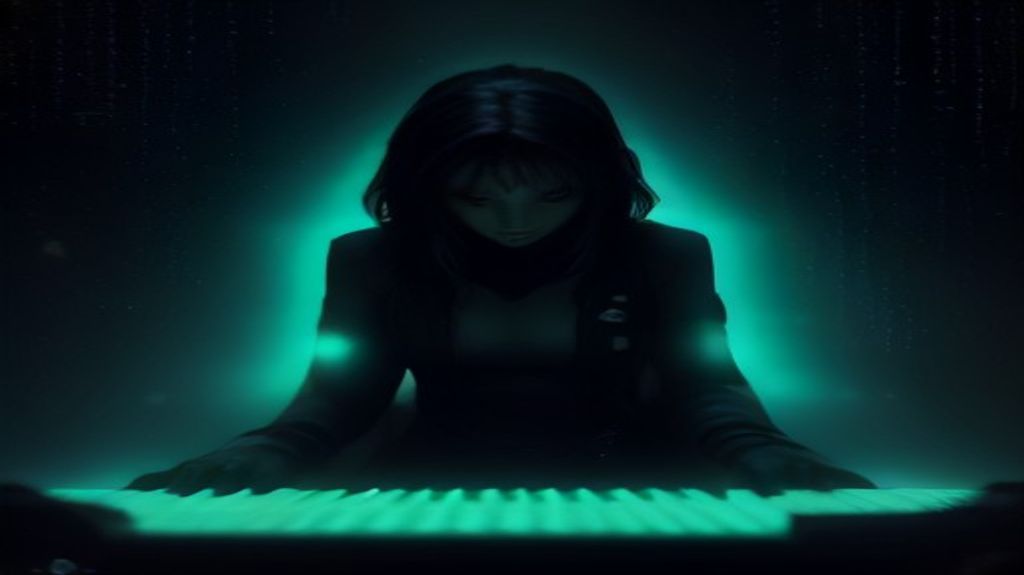
Another software synth isn't news. But one that ditches the piano roll for an abstract map of just-intonation is. KHÔRA is less an instrument and more a new way to navigate sound.
Most software synthesizers are just emulations. They give you digital copies of old Moog filters and Roland oscillators, all tethered to a piano-roll grid. It’s a familiar workflow, but it’s also a creative cage built from 300-year-old tuning assumptions. A new instrument for macOS called KHÔRA isn't interested in copying the past. It has no keyboard, no labels, and no skeuomorphic knobs. Instead, it presents the user with a living geometric interface—a ring of stars that maps out pitches. It’s an instrument for exploring harmonic space itself, not just for banging out another chord progression in C major.
Under the hood, KHÔRA is a drone-based harmonic engine built around just-intonation. Unlike the 12-tone equal temperament that governs nearly all Western music, where intervals are slightly compromised to work in every key, just-intonation uses pure mathematical frequency ratios. The result is a world of perfectly resonant, and sometimes alien-sounding, microtonal colors. The developer, Laboratory 0, built five generative chord modes, arguing that KHÔRA offers a new way to explore harmonic space through interaction. "Genesis" creates new consonant chords from the root, while "Metabole" holds some notes and swaps others for gentle evolution. The most interesting is "Topos," which moves the entire chord structure through the harmonic space, preserving its internal relationships while revealing wildly different microtonal textures.
This isn't a play for market share from a big studio like Arturia or Native Instruments. Laboratory 0 is a small, independent developer, and as Synthtopia reported, KHÔRA is being sold on Gumroad with a "Name a fair price" model. The economics here are about sustenance, not scale. This is a tool built out of conviction, aimed squarely at experimental composers, academic musicians, and sound designers bored with the status quo. By sidestepping the venture capital route and using direct-to-creator platforms, the developer retains absolute control, answering to no one but the user and their own vision. The real currency isn't profit margin; it's influence. It challenges the very idea that a digital instrument needs to look and feel like a physical one.
In the next few years, we won't see KHÔRA on the pop charts. That was never the point. Its true impact will be measured by how its design philosophy trickles up to the mainstream toolmakers. If its abstract, visually-driven interface finds a dedicated user base, larger companies will take note, potentially integrating similar non-traditional views into their own flagship DAWs and synthesizers. This is how genuine change happens in creative software: not from a boardroom, but from a radical idea that proves its worth in a niche. We’ve been trapped in the metaphor of the physical studio for forty years. KHÔRA suggests a way out. The real question is whether musicians are ready to abandon the familiar comfort of a keyboard for the cold, beautiful mathematics of the stars.
More in Music
The Perfect Space Echo Is Now Free and Open Source
A flawless, open-source clone of the legendary Roland Space Echo just landed for zero dollars. It's more than a free plugin; it's a direct challenge to the economics of professional audio software.
A Software Prosthetic For Roland's Forgotten Powerhouse Synth
Roland's Integra-7 is a classic synth module trapped behind a terrible interface. A new third-party editor finally unlocks its full power, no thanks to the original manufacturer.