Music Theory in a Box Just Got Smarter
?utm_source=reddit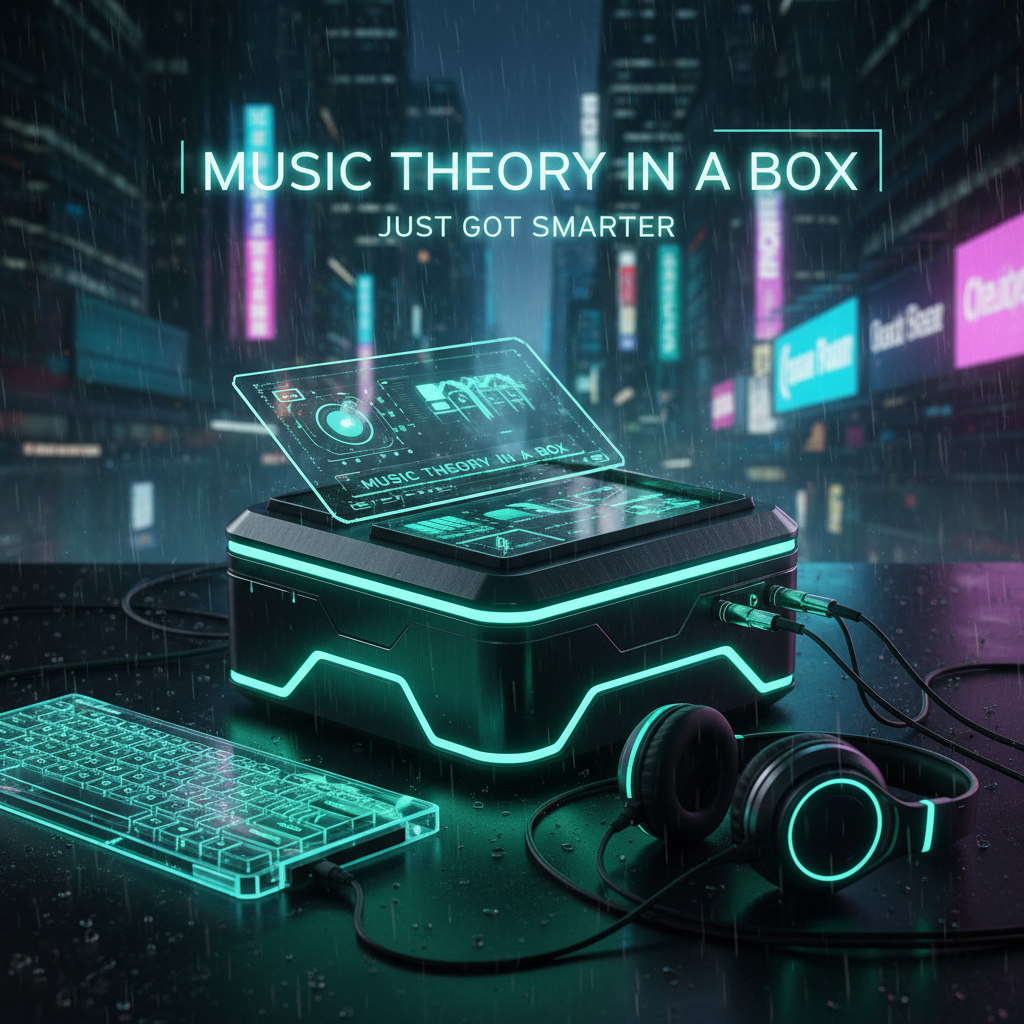
The KordBot has always been a hardware cheat code for musicians. A new firmware push makes the shortcuts faster and more intuitive. The real question is what that does to the craft.
Most MIDI controllers are just dumb plastic keys. You press one, a signal goes out, and your computer makes a noise. Isla Electronics’ KordBot was never that. It’s an opinionated co-writer, a hardware device built around the idea that music theory can be outsourced. It helps you find chords and build progressions you might not have discovered on your own. Now, a major firmware update sharpens that proposition. The device isn’t new, but the refresh serves as a reminder that the most interesting action isn't always in groundbreaking hardware, but in the code that makes existing tools unexpectedly potent. It’s a shortcut to sounding good, baked into a box you can touch.
Under the hood, this isn’t generative AI trying to guess the next note. The KordBot runs on a dedicated microcontroller, likely an ARM Cortex-M series chip, executing deterministic code. Think of it as a musicologist, not a muse. The new firmware is a C++ update for this specialized brain, refining its internal encyclopedia of scales, chord voicings, and harmonic relationships. It connects to everything in a modern studio: classic 5-pin DIN MIDI for a vintage Roland Juno-106, USB for Ableton Live on a laptop, and Bluetooth LE for an iPad running Korg Gadget. The illuminated keyboard provides instant visual feedback, lighting up the “correct” notes for a given key. The result is a zero-latency system that feels like an instrument, not an application that might crash.
Isla Electronics is a boutique operation, a one-man-show in spirit run by founder Brad Holland. He’s not competing with Yamaha; he’s competing with software. For around $99, a plugin like Scaler 2 offers much of the same theoretical power directly inside a digital audio workstation. The KordBot hardware costs around six times that. Isla’s entire business model is a bet that musicians will pay a significant premium to escape the trackpad and interact with music through physical buttons, knobs, and a strum strip. The winners are producers who value tactile workflows over budget software. The losers could be the big software houses like Native Instruments or Arturia if this boutique hardware trend proves that the right interface can command a price point software never will.
This firmware update points to where controllers are headed over the next few years. The line between a passive keyboard and an active sequencing partner is dissolving. Expect to see similar, if less radical, “smart” features baked into the next generation of controllers from the big-name brands. The concepts proven by small shops like Isla will be absorbed into mass-market products, making musical guardrails a standard feature. This isn’t a story about robots replacing songwriters. It’s about the evolution of the instrument itself. The only real question is whether a tool that removes the friction of learning the rules ultimately elevates a musician’s voice, or simply creates a permanent dependency on the guide rails.