Open Source Brains for Robot Bodies
?utm_source=reddit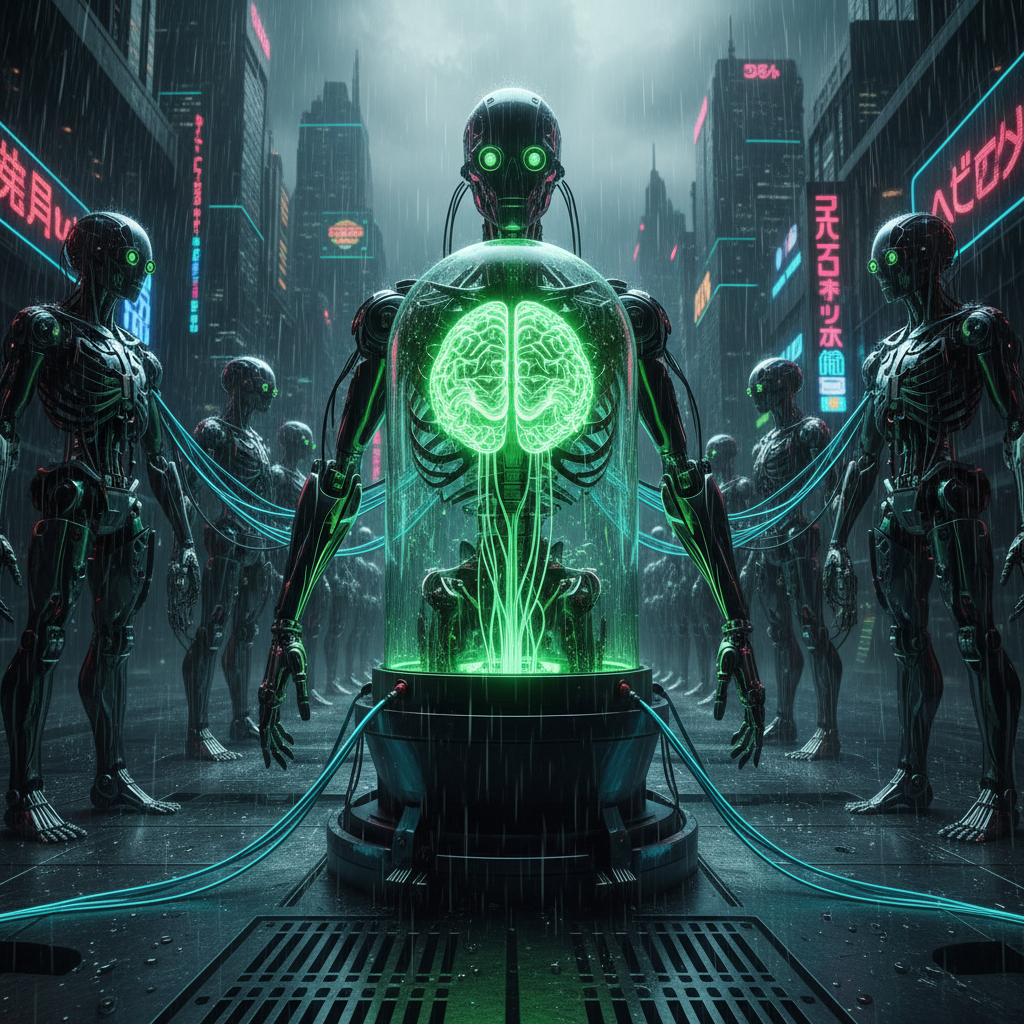
Building a robot brain used to be a PhD-level project. Now it's closer to downloading an app. The hardware is still hard, but the soul of the machine is becoming a commodity.
For years, making a robot move was the hard part. Making it think was the nearly impossible part, a bespoke software odyssey reserved for places with budgets like Boston Dynamics or a DARPA grant. That era is ending. The chassis and actuators are still a game of physics and capital, but the intelligence is coming off the shelf. We're witnessing the commodification of the robotic mind, where the complex neural architecture that allows a machine to see a door and know how to open it is becoming a downloadable, open-source library. This doesn't mean your Roomba is about to achieve sentience. It means a small team in a garage can now build a prototype that would have required a world-class AI lab just five years ago.
The magic isn't a single breakthrough but a stack of them. At the bottom, you have frameworks like ROS 2, the Robot Operating System, which acts as a generic plumbing layer. It lets the robot’s camera talk to its motor controllers without a team of electrical engineers writing custom drivers for months. The new layer is what runs on top. Projects like Hugging Face's LeRobot and Google's ALOHA dataset are doing for robotics what ImageNet did for computer vision. They provide vast, pre-trained models for fundamental robotic tasks—grasping, navigation, object identification. A startup can pull down a base model, run it on an NVIDIA Jetson Orin board sitting inside their machine, and fine-tune it with a few hundred examples from their specific use case. The failure mode is brittleness; a model trained to pick red apples might completely miss a green one, proving the gap between a controlled demo and a chaotic world is still very real.
This shift scrambles the board for who wins and who loses. The losers are the legacy robotics firms whose primary moat was their vertically integrated, proprietary software stack. They now have to compete with a thousand smaller, faster teams building on a free and constantly improving foundation. The winners are legion. Small hardware startups can focus on perfecting their one task—picking strawberries, sorting recycling—by bolting an open-source brain onto their specialized hardware. The brokers of this new world are platforms like Hugging Face, who become the de facto app store for robotic skills, and NVIDIA, whose GPUs are the computational bedrock for both training and deploying these models. This creates a market dynamic where innovation is cheaper, but success depends on application and execution, not just deep AI knowledge.
In the next two to three years, the hardware will become the most visible bottleneck. Software intelligence will continue its exponential price-performance curve while the cost of actuators, batteries, and durable chassis remains stubbornly linear. We will see an explosion of single-purpose robots that are good enough for specific commercial jobs, but the dream of a generalist humanoid remains distant. The demo loop will accelerate; companies will be able to show off a robot performing a complex task within weeks. The quiet, unglamorous work of making that robot perform the same task for ten thousand consecutive hours in a real-world environment without breaking down is where fortunes will be made or lost. And as these capable machines proliferate, built on shared code of opaque origin, who owns the liability when one of them makes a critical mistake in a hospital or a home?
More in Robotics
DARPA Wants Robots That Can Actually Do Real Work
The backflips are cool, but can a robot lift a spare tire? The Pentagon's latest challenge is a reality check for automation, focused on the grunt work of military logistics.

Humanoid Robots Are Here, Just Not In Your Kitchen
The viral videos show bipedal robots doing chores. The reality is that less glamorous mobile manipulators are already here, working factory shifts you'll never see.