Silicon Audio: Expressive E Osmose Binds MIDI Polyphonic Expression Directly Into Elastic OSC Synthesizer Core
?utm_source=reddit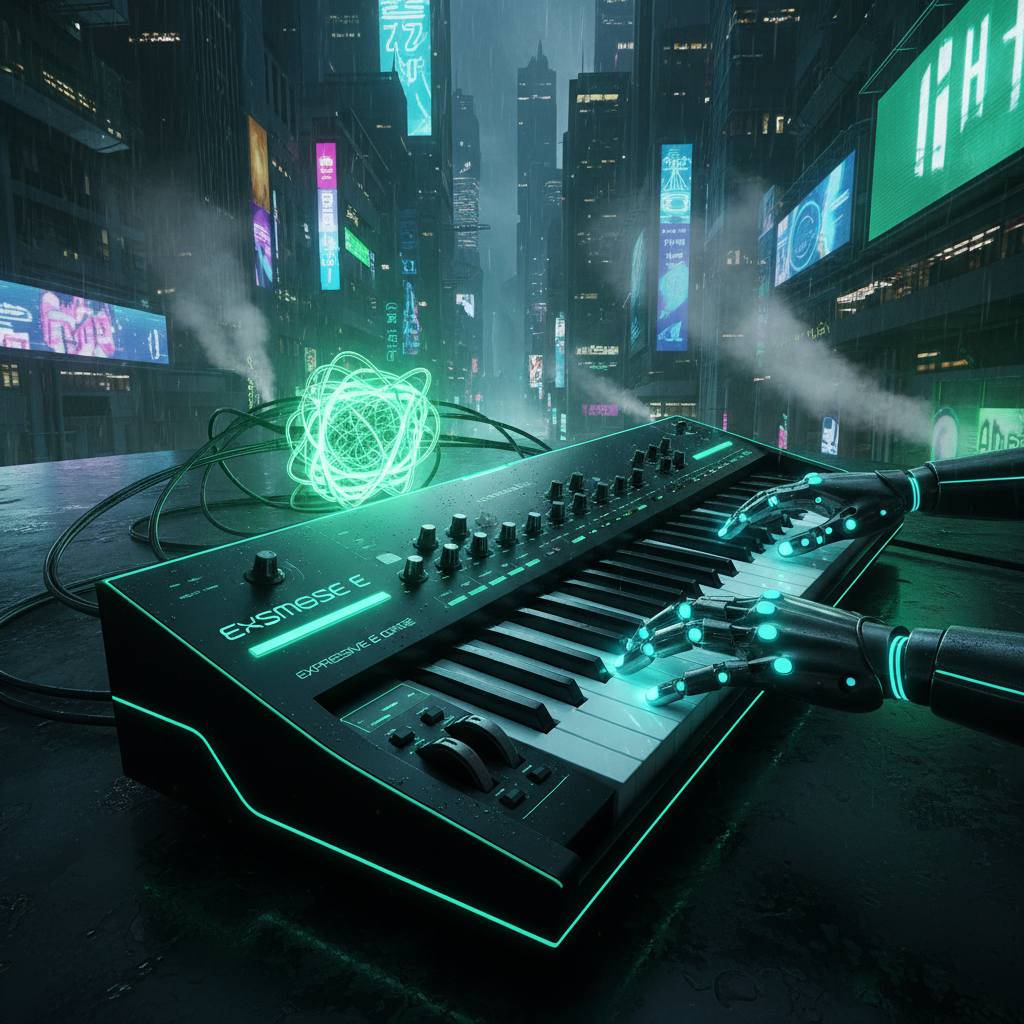
Hardware and software layers merge as the Expressive E Osmose implements high-resolution MIDI Polyphonic Expression data to drive the Elastic OSC engine through granular real-time modulation.
The tactile relationship between performer and synthesis engine is enduring a radical reconstruction as MIDI Polyphonic Expression moves from niche experimentalism to a baseline requirement for high-end digital instruments. This convergence is best exemplified by the recent integration between the Expressive E Osmose and the Elastic OSC software environment, a pairing that bypasses traditional on-off trigger mechanics in favor of a continuous data stream. For decades, the piano-style interface forced a compromise between harmonic complexity and physical rigidity, but the current wave of gestural controllers is reclaiming the microtonal fluidity once reserved for bowed strings and woodwinds, signaling a departure from the static grid of Western tempered tuning.
Engineering this level of responsiveness requires a massive increase in the polling rate of the physical keybed, where each sensor must track X, Y, and Z-axis movement simultaneously across multiple voices. The Osmose employs a proprietary sensor mechanism that manages these vectors without the latency spikes common in older MPE implementations, feeding high-fidelity control data into the Elastic OSC architecture. Within the software, this translates to real-time manipulation of oscillator wave-tables and filter cutoff frequencies on a per-note basis. By assigning vertical pressure to specific wavetable indices and lateral movement to pitch-width parameters, the system achieves a level of spectral variation that makes every strike unique, avoiding the stale repetition of traditional sampled synthesis.
The economics of this sector are shifting as manufacturing costs for high-precision sensor arrays begin to normalize, allowing smaller developers like Expressive E to compete with established giants like Roland and Korg. While the industry incumbents have historically relied on mass-produced membrane switches to maintain margins, the demand for expressive controllers is forcing a reallocation of research capital toward sensor-rich hardware. Software developers are following suit, with companies like Ableton and Bitwig hardening their MPE ingestion pipelines to support this influx of polyphonic metadata. This creates a feedback loop where hardware acquisition is justified by an increasingly robust ecosystem of compatible digital signal processing tools, moving the equipment away from luxury boutique status toward essential workstation standard.
The integration of gestural hardware and complex synthesis logic indicates a broader move toward hyper-physical digital instruments that behave more like acoustic entities than static software blocks. As sensor resolution increases and algorithmic processing becomes more efficient at the edge, the barrier between the performer's intent and the resulting waveform will continue to erode. The likely trajectory involves the integration of machine learning models that can interpret nuanced human gestures to predict and automate complex spectral shifts, further blurring the line between manual playing and algorithmic generation. This evolution ensures that the future of digital audio resides not in the mouse-click of a timeline, but in the physical pressure of a fingertip against a responsive silicon substrate.
More in Music
The Perfect Space Echo Is Now Free and Open Source
A flawless, open-source clone of the legendary Roland Space Echo just landed for zero dollars. It's more than a free plugin; it's a direct challenge to the economics of professional audio software.
A Software Prosthetic For Roland's Forgotten Powerhouse Synth
Roland's Integra-7 is a classic synth module trapped behind a terrible interface. A new third-party editor finally unlocks its full power, no thanks to the original manufacturer.