Silicon Audio: Novation Binds Raw Matrix Control Surface Directly into FL Studio Core
?utm_source=reddit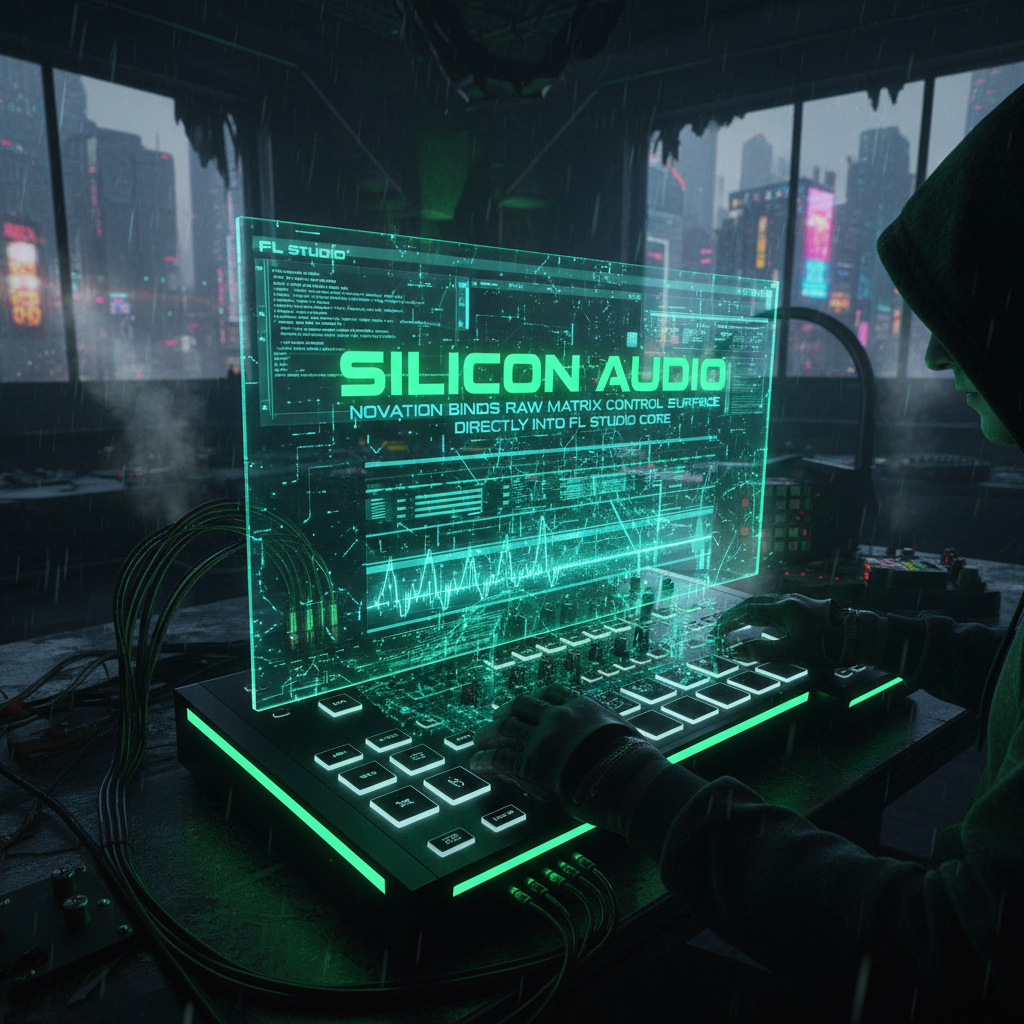
Novation tightens the feedback loop between physical hardware and digital sequencing logic through a high-fidelity OLED interface and dual-way NKS protocol integration for real-time parameter feedback.
The friction between tactile hardware and the virtualized architectures of digital audio workstations remains the final bottleneck in high-throughput music production. For decades, producers have grappled with the cognitive load of mapping generic MIDI controllers to proprietary software environments, a process that frequently results in a catastrophic loss of creative momentum. The emergence of the second-generation FLkey series signifies more than a cosmetic hardware update; it represents a specialized hardware-to-code bridge designed to eliminate the translation layer between the user and the Image-Line environment. This release signals a strategic push toward dedicated hardware ecosystems where the silicon is fundamentally tuned to the software logic it commands.
Engineering the new FLkey required a significant upgrade to the data-transfer pipeline through the implementation of a high-resolution OLED display and continuous encoders capable of bi-directional telemetry. Unlike passive MIDI interfaces, these controllers utilize a specialized protocol that allows the Mixer and Channel Rack states to synchronize in real-time, displaying specific parameter values rather than abstract integer ranges. The 49- and 61-key models incorporate semi-weighted keybeds with a refined mechanical action designed to handle the variable velocity requirements of both percussive sequencing and harmonic performance. By embedding hardware-side Scale and Chord modes, the system offloads arithmetic processing for complex theory from the host CPU to the local controller firmware, reducing latency and freeing system resources for heavy plugin chains.
The competitive landscape for dedicated DAW hardware is currently dominated by vertical integration structures, most notably seen in the tight coupling of Ableton and the Push controller. Novation is positioning this updated hardware as a defensive moat for FL Studio’s massive market share in the beat-making and electronic sectors, particularly against the rising tide of mobile-first production suites. By offering a entry price point of 129 dollars for the Mini variant, Novation is targeting the high-volume demographic of home-studio operators and nomadic producers. The inclusion of Native Instruments’ NKS-ready protocol suggests a broader alliance between hardware manufacturers to consolidate control standards, effectively squeezing out independent manufacturers who lack the capital for deep ecosystem integration.
Projecting the trajectory of these hardware-software twins points toward a future where the distinction between an instrument and a control surface becomes functionally obsolete. We are moving toward a state where MIDI is no longer just a trigger mechanism but a dense stream of metadata governing every granular aspect of the synthesis engine. As the FLkey series matures, expect to see even tighter integration with generative AI assistants residing within the DAW, where physical knobs serve as high-bandwidth tactile inputs for steering neural synthesis parameters. The reliance on standard HID drivers will likely give way to more proprietary, low-latency protocols as producers demand more immediate physical feedback from their increasingly complex digital environments.
More in Music

The Perfect Space Echo Is Now Free and Open Source
A flawless, open-source clone of the legendary Roland Space Echo just landed for zero dollars. It's more than a free plugin; it's a direct challenge to the economics of professional audio software.

A Software Prosthetic For Roland's Forgotten Powerhouse Synth
Roland's Integra-7 is a classic synth module trapped behind a terrible interface. A new third-party editor finally unlocks its full power, no thanks to the original manufacturer.