The BCI Has Its First Power User, and He Has a Job
?utm_source=reddit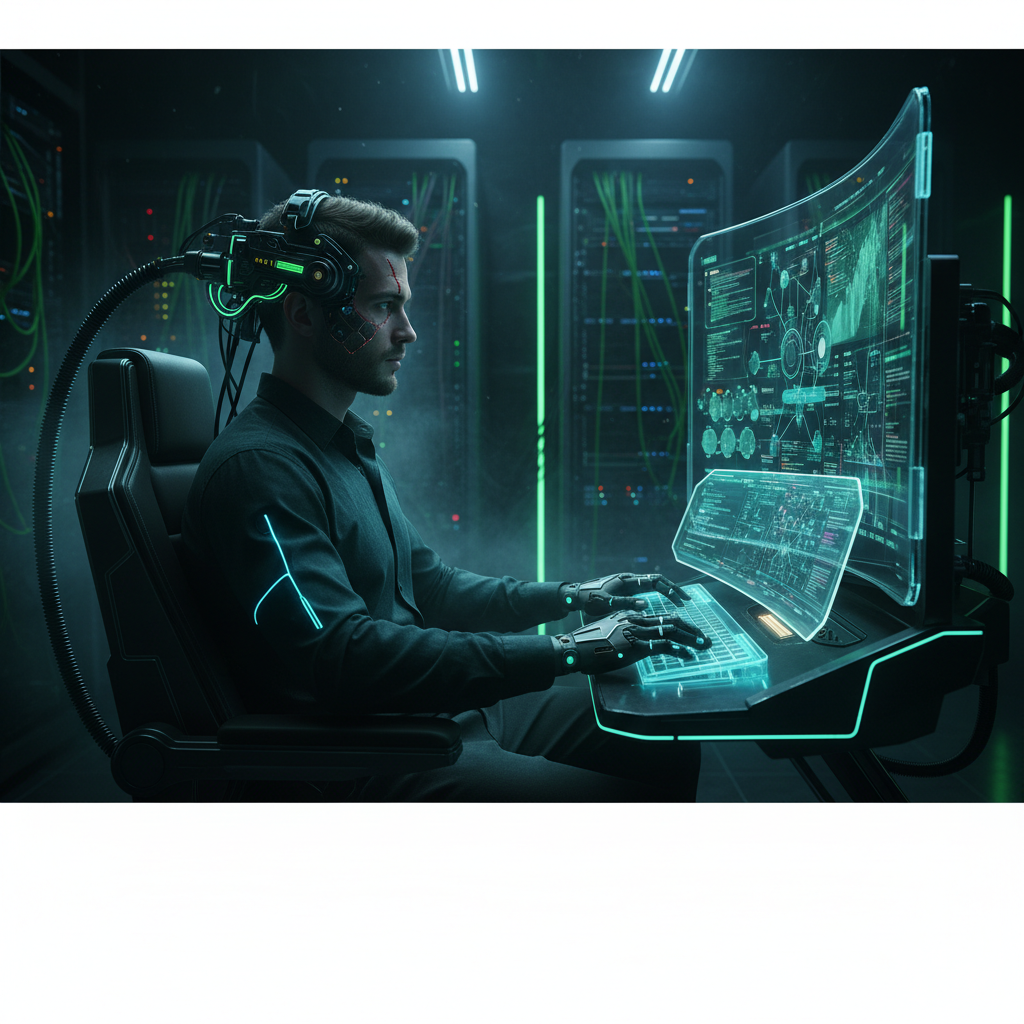
For years, brain-computer interfaces were a lab demo. Now, a man with ALS has used his for thousands of hours to speak, work, and live. This is not a trial run anymore.
Most brain-computer interfaces are a carefully staged spectacle. Casey Harrell’s is a daily tool. Paralyzed by ALS, Harrell isn't just a research subject; he’s what one neuroengineer calls the first “power user” of a speech BCI. This isn't about spelling out a few pre-recorded sentences in a lab. In the nearly three years since his surgery, Harrell has logged over 3,800 hours on the system at home, using it to communicate, surf the web, and continue his work as an environmental activist. The interface is not the story. The independence is the story. The fact that a system this complex has moved from a researcher’s direct supervision to being managed by a home carer changes the stakes for what a medical implant can be.
The hardware is a direct tap into the source. During a five-hour operation, surgeons placed four arrays of 64 electrodes each into Harrell's speech motor cortex, the brain region that orchestrates the mechanics of talking. These 256 probes are wired to two titanium pedestals that sit on the exterior of his skull, creating physical docking ports to a computer. The software decodes neural signals in two stages: first mapping brain activity to the 39 phonemes of English speech, then assembling those sounds into words. As the team reported in the journal Nature Medicine, the system now has a 125,000-word vocabulary with 97.5% accuracy. A common failure mode for long-term implants is scar tissue forming around the electrodes, but so far, Harrell's signal remains clear.
While Neuralink sucks up the media oxygen with its wireless hardware, slower-moving academic projects are winning the long game on data. The UC Davis team behind Harrell’s implant is playing for durability, proving their system can last years, not just quarters. The capital involved is research grant funding and university resources, a different model than the venture-backed blitz-scaling of competitors like Synchron and Blackrock Neurotech. For now, the only people who win are the handful of patients like Harrell, who gain access through intensive clinical trials like this one. The FDA gatekeeps this entire field, and the cost of the surgery and dedicated research staff means this technology is nowhere near a scalable product. The most valuable asset isn’t a patent; it’s a patient with thousands of hours of clean, usable data.
The next five years will be defined by the push to eliminate wires. Those skull-mounted pedestals are a necessary but invasive stopgap. The real engineering prize is a fully implanted, wirelessly recharged device that a patient can forget is there. Getting there requires not only miniaturizing the hardware but also proving it can survive the hostile environment of the human body for a decade or more. The transition from a single power user to dozens will test the limits of custom calibration and support. But the fundamental question isn't whether the tech will get smaller or faster. It's what it means when the ability to speak depends on a hardware stack owned by a university or a corporation. Who gets the final say over the updates?
More in Medical

Epic Systems' Walled Garden Is Under Federal Scrutiny
Epic runs the software behind American medicine. Now the FTC is investigating whether its tight grip on data and employees is illegal. This is about more than software; it's about control.

Eli Lilly's War on the Black Market for a Miracle Weight-Loss Drug
A drug that delivers astonishing weight loss has spawned a massive gray market. Now, the pharma giant that makes it is fighting back, and the supply chain is about to get ugly.