The Perfect Space Echo Is Now Free and Open Source
?utm_source=reddit
A flawless, open-source clone of the legendary Roland Space Echo just landed for zero dollars. It's more than a free plugin; it's a direct challenge to the economics of professional audio software.
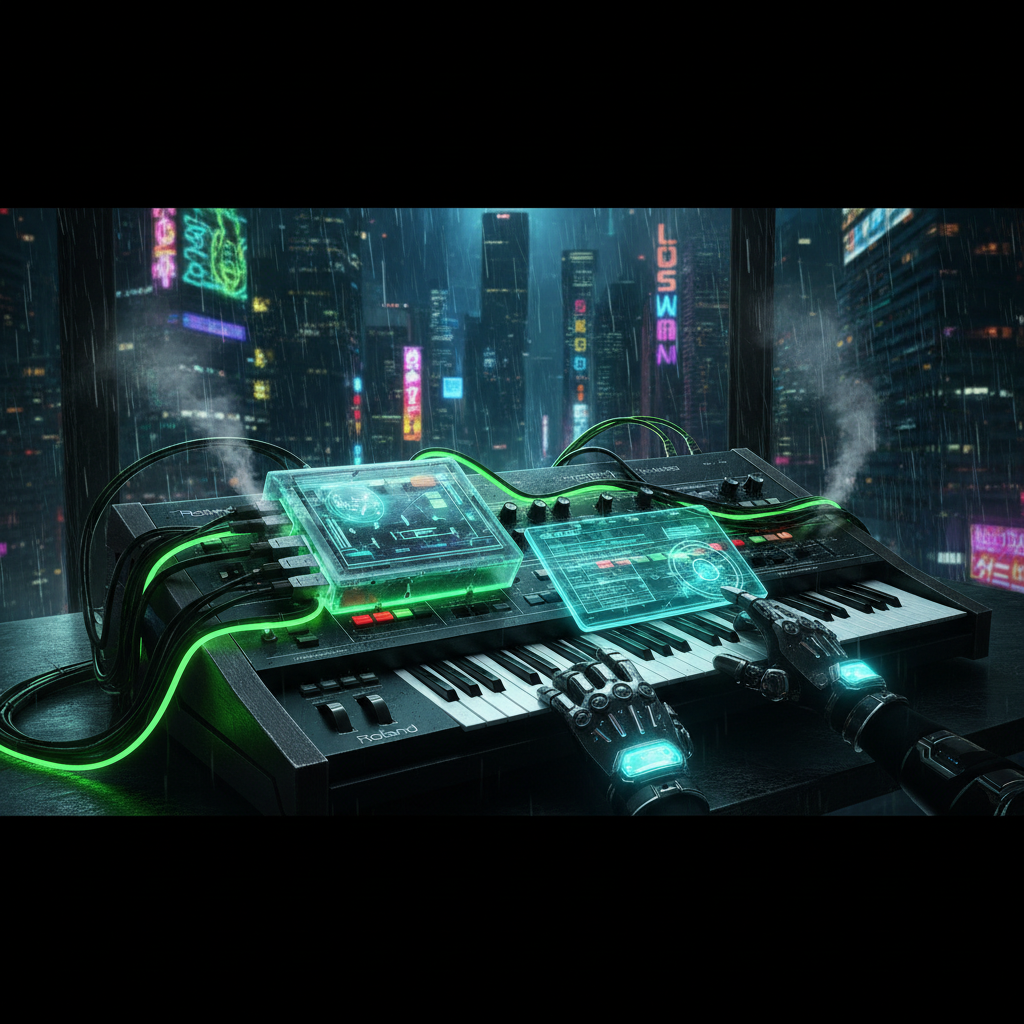
The Roland RE-201 Space Echo is not just a piece of gear. It’s an artifact, a sound that defined entire genres with its warbling, saturated delays. Originals fetch thousands on the used market. Official software emulations from giants like Universal Audio and Arturia will set you back a couple hundred dollars. Now, there’s another option. Dusk Audio has released Tape Echo 2, a free three-head tape delay and spring reverb plugin. It’s not just inspired by the classic; by all accounts, it’s a meticulous digital replica. When a perfect simulation of an iconic tool costs nothing, the conversation changes. The plugin is fine. The price tag is the actual story.
This isn’t a simple delay effect with a tape hiss sample layered on top. Tape Echo 2 models the physical machine from the input gain stage to the output amplifier. Synthtopia reports that Tape Echo 2 is a free, unofficial copy of the Roland Space Echo, modeling the entire signal path. The code simulates a single motor driving three playback heads, meaning a change in delay time includes the sluggish, organic glide of motor inertia. It also simulates the physical decay of the medium itself through a 'Tape Age' parameter that dials in wow, flutter, hiss, and even the occasional dropout as a modeled tape splice passes the read heads. The whole project is open-source software released under the GPL-3.0-or-later license, and it runs as a VST3, AU, or CLAP plugin on basically any modern production machine.
Dusk Audio gives its work away for free. This isn't a demo or a lite version; it is the full product. That business model—or lack thereof—is a direct torpedo aimed at the hull of the pro audio software market. Companies like Arturia, Waves, and Universal Audio have built entire product lines on selling digital access to vintage hardware sounds. An academically precise, zero-cost alternative erodes their value proposition overnight. The winner is every musician or producer on a budget. The loser is any company whose primary competitive advantage was the quality of its algorithm. For Dusk Audio, the payoff is reputation and the quiet satisfaction of contributing a powerful tool to the public domain. For the incumbents, it’s a five-alarm fire.
This is the new normal for software instruments and effects. As processing power becomes cheaper and digital signal processing knowledge spreads, the core algorithms for emulating analog gear are becoming a commodity. Expect to see more high-fidelity, open-source projects like this emerge over the next few years, targeting other revered studio classics. The major players will likely be forced to compete on user experience, ecosystem integration, or hardware-dependent platforms like UAD's Apollo interfaces to justify their price tags. Selling a single plugin for $199 is a much harder business when a free version that sounds just as good is a click away. The real question isn't whether the emulation is perfect. It's what, exactly, is an algorithm worth when its source code is a public good?