GM’s War on Your Dashboard Has a $199 Rebel
?utm_source=reddit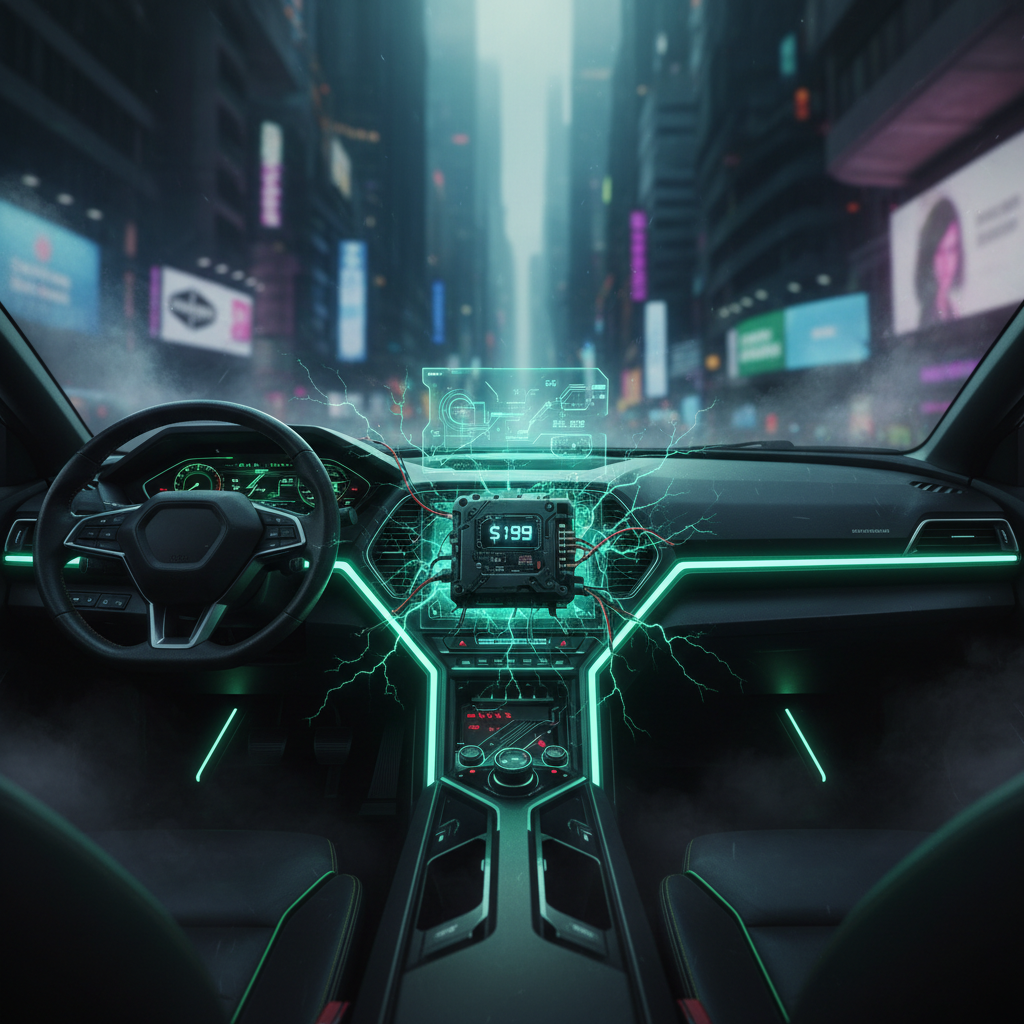
General Motors ripped out Apple CarPlay to build a subscription empire. A small box offers to restore it, but the cat-and-mouse game over who owns your screen has just begun.
General Motors made a bet. They bet that you care more about their subscription revenue than you do about your iPhone's interface. So they ripped Apple CarPlay and Android Auto out of their new EVs, starting with the 2024 Blazer and Equinox. It’s a bold move for a company banking its future on electric vehicles, alienating millions of drivers who just want their maps and music to work. Now, a small box offers a counter-move. For $199, a device called EV Play promises to restore the familiar grid of icons to your dashboard. The fix itself isn't the real story. The fact that it needs to exist at all is the story, a small skirmish in the bigger war over who owns the screen you look at every day.
This isn't jailbreaking your car. It’s a loophole that uses the very system GM forces on its drivers. The EV Play dongle works by having the user download a specific app from the car's native Google Play Store—the one built into GM's Android Automotive OS. Once the app is installed, you plug the EV Play box into a USB port. The box then projects a fully functional CarPlay or Android Auto session which is displayed by the app. It’s a nested doll of operating systems, running one platform as an application inside another. The failure mode is obvious and openly acknowledged by the device's creators: GM can simply push a software update to block the app, turning the $199 box into a paperweight overnight.
This fight was never about a better navigation system. Follow the money. By forcing drivers onto its proprietary Ultifi platform, GM positions itself to collect high-margin subscription fees for everything from premium mapping to future driver-assist features. It also gets to harvest a firehose of valuable driver data. CarPlay and Android Auto hand that entire relationship—and the recurring revenue—straight to Apple and Google. A small company selling a $199 dongle is a direct financial threat to GM’s multi-billion-dollar software gambit. For now, the consumer can get a desired feature back. But GM holds the ultimate kill switch, and the EV Play website explicitly warns customers that the device could be disabled at any time.
This cat-and-mouse game will become the standard battlefield for the connected car over the next five years. For every wall a manufacturer like GM or Porsche builds around their infotainment stack, a grey-market hardware company will sell a ladder. The cycle is predictable: a workaround appears, gains traction among frustrated owners, and then the automaker pushes an over-the-air update to shut it down, usually citing security concerns. This isn't just about one dongle or an unpopular corporate decision. It's a fundamental conflict over ownership in an era of perpetually updated hardware. You bought the car, the battery, and the screen. So who really owns the pixels?